Why Use Scaling? From Abstract to Concrete
Scaling questions are a tool used to assess complex issues in a simple manner.
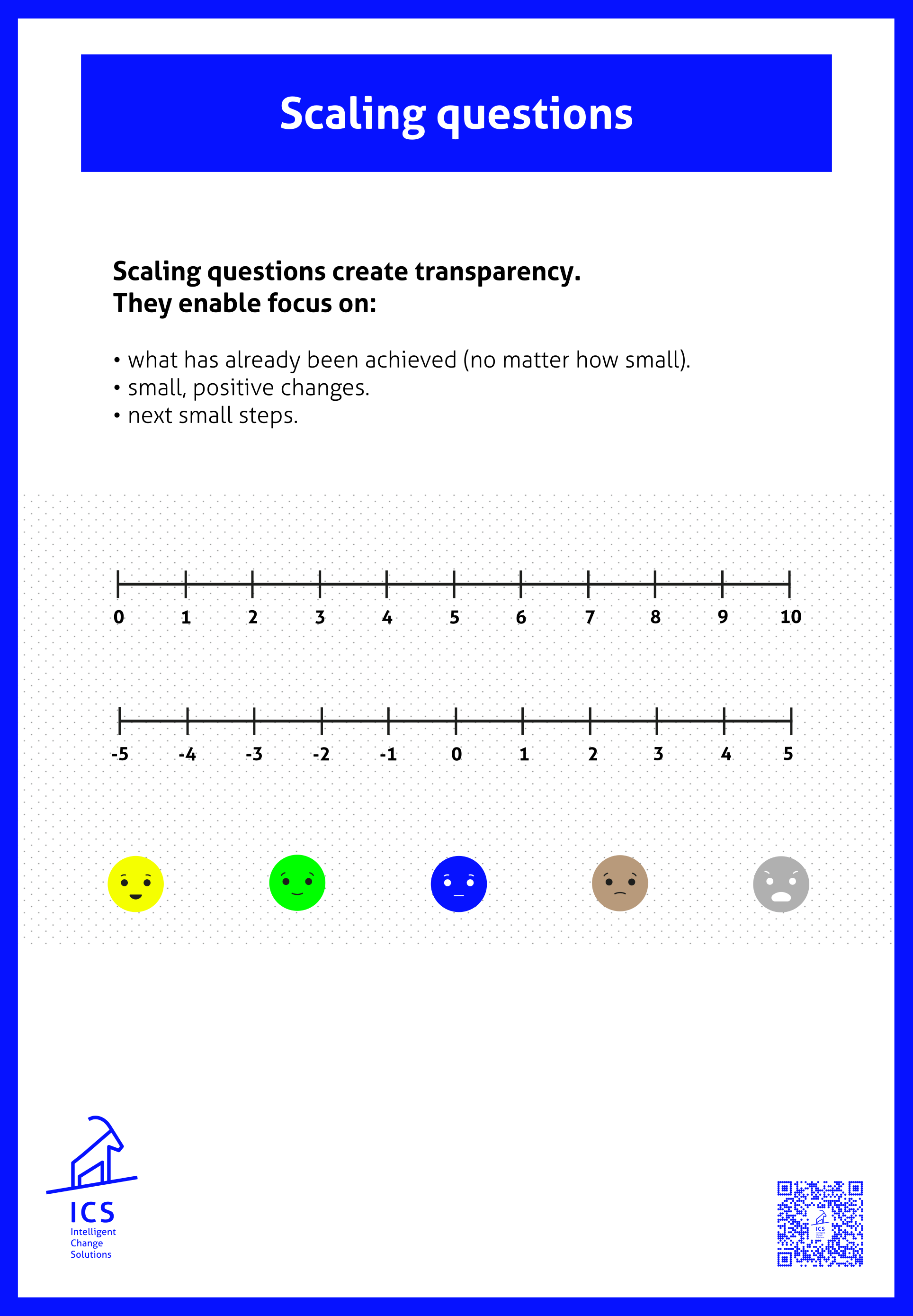
Scaling questions require responses on a predetermined scale, helping participants to concretize abstract concepts. The choice of scale is crucial—using a scale from 1 to 10 differs significantly from using a scale from -5 to +5. There are also scales that work with hand signals or a range of emoticons (from sad face 😒 to happy face 😊).
Examples of Scaling Questions in Practice
On a scale from 1 to 10, how do you rate your progress over the past week?
On a scale from -5 to +5, how focused are you right now?
Which emoticon best matches your current feeling?
Practical Benefits – Tracking Change Over Time
Scaling questions simplify the evaluation of complex issues. Precise answers are not always necessary; a response like “somewhere between 2 and 4” is sufficient. Scaling questions introduce a measurable aspect, particularly in terms of development and change. For instance, an employee, student, or colleague who rates their confidence at a 3 on a “confidence scale of 1 to 10” may reach a 4.5 the next day. This allows us to focus on the 1.5-point increase and consider how to further support development in this direction.