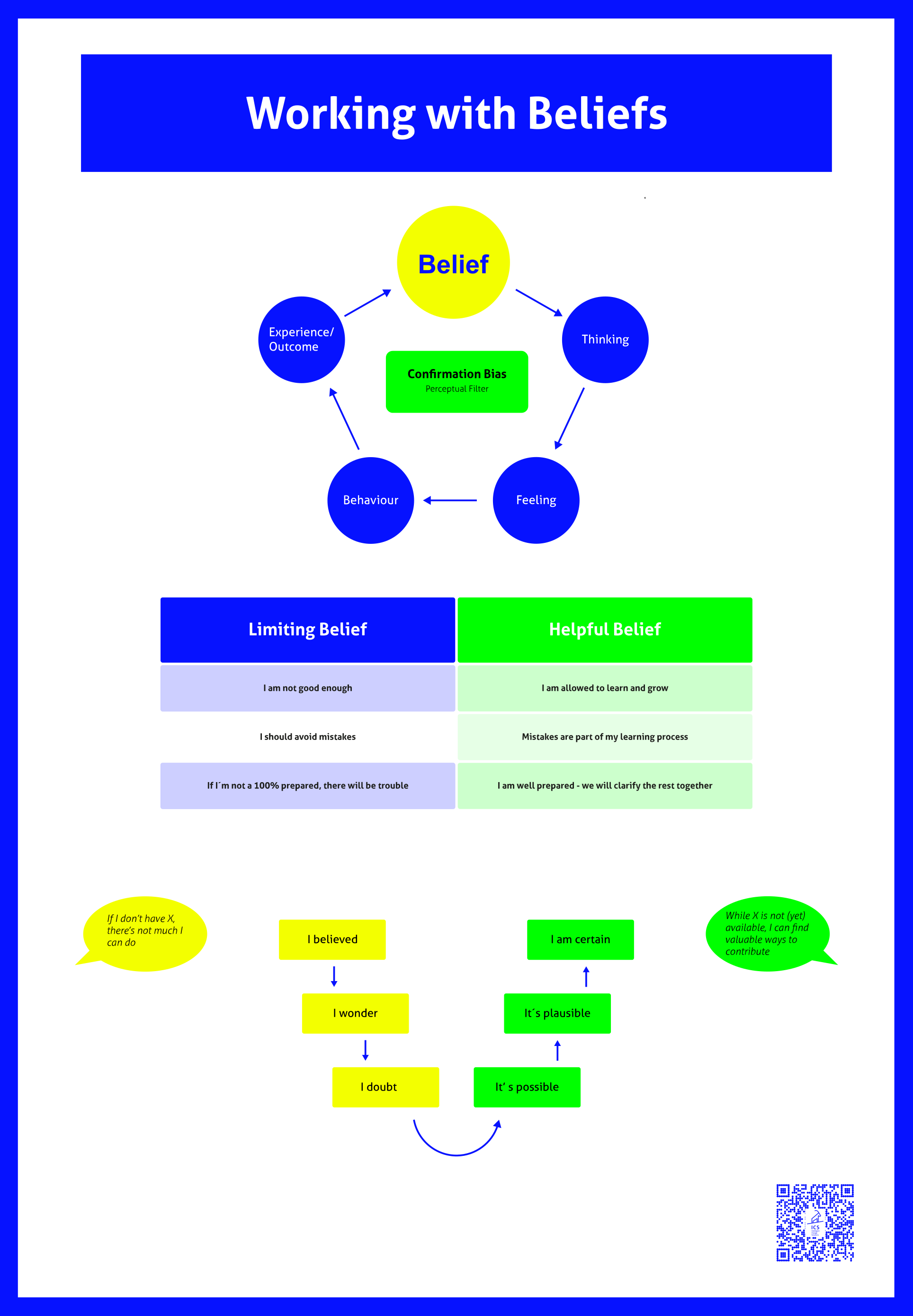
A Guide to Changing Limiting Beliefs with the Help of Cognitive Behavioral Coaching
What Are Limiting Beliefs?
Limiting beliefs are convictions that prevent us from reaching our full potential. These beliefs are often deeply rooted and can negatively influence our behavior and emotions. Cognitive behavioral coaching (CBC) offers effective techniques for identifying and changing these beliefs.
The following step-by-step guide helps you recognize limiting beliefs and transform them into positive, supportive beliefs.
1. Identifying Limiting Beliefs
The first step is to become aware of your limiting beliefs. These beliefs may appear as negative thoughts, self-doubt, or inappropriate generalizations.
Examples of limiting beliefs:
“I am not good enough.”
“I will always fail.”
“Others are better than me.”
Positive alternatives:
“I am good enough just as I am.”
“I have the ability to be successful.”
“I have unique strengths and abilities.”
2. Creating a Belief Table
To analyze and change your beliefs systematically, it is helpful to create a table based on the following structure.
| LIMITING BELIEF | EVIDENCE SUPPORTING THIS BELIEF | EVIDENCE AGAINST THIS BELIEF | POSITIVE ALTERNATIVE |
|---|---|---|---|
| I am not good enough. | Once, my manager criticized my work. | I have successfully completed many projects. | I am good enough just as I am. |
| I will always fail. | I have made a few mistakes in the past. | I have also achieved many successes. | I have the ability to be successful. |
| Others are better than me | My colleague received a promotion. | I have received positive feedback from colleagues. | I have unique strengths and abilities |
3. Analyzing Limiting Beliefs
For each limiting belief in your table, write down:
Evidence supporting this belief: events or situations that seem to confirm the belief.
Evidence against this belief: evidence showing that the belief is not always true.
4. Developing Positive Alternatives
Replace each limiting belief with a positive, supportive alternative. These alternatives should be realistic and constructive.
5. Reviewing and Strengthening the New Beliefs
Regularly repeating and reinforcing the new beliefs is essential for breaking old patterns and establishing new ways of thinking.
Techniques for reinforcement:
Daily affirmations: Repeat the positive beliefs every morning.
Visual reminders: Write down the new beliefs and place them where you can see them.
Journaling: Document successes and positive experiences that support the new beliefs.6. Anwendung im Alltag
6. Applying the New Beliefs in Everyday Life
Actively integrate the new beliefs into your everyday life. Pay conscious attention to situations in which the old limiting beliefs reappear, and replace them with the new positive beliefs.
7. Reflection and Adjustment
Reflect on your progress regularly. Check whether the new beliefs are helping you achieve your goals and improve your well-being. Adjust them if necessary to make sure they remain relevant and supportive.
Conclusion: Change Requires Structure and Practice
Changing limiting beliefs requires awareness, reflection, and continuous effort. By applying the principles of cognitive behavioral coaching, you can identify and analyze negative beliefs and transform them into positive alternatives. A systematic approach using a belief table helps you make these changes in a structured and sustainable way