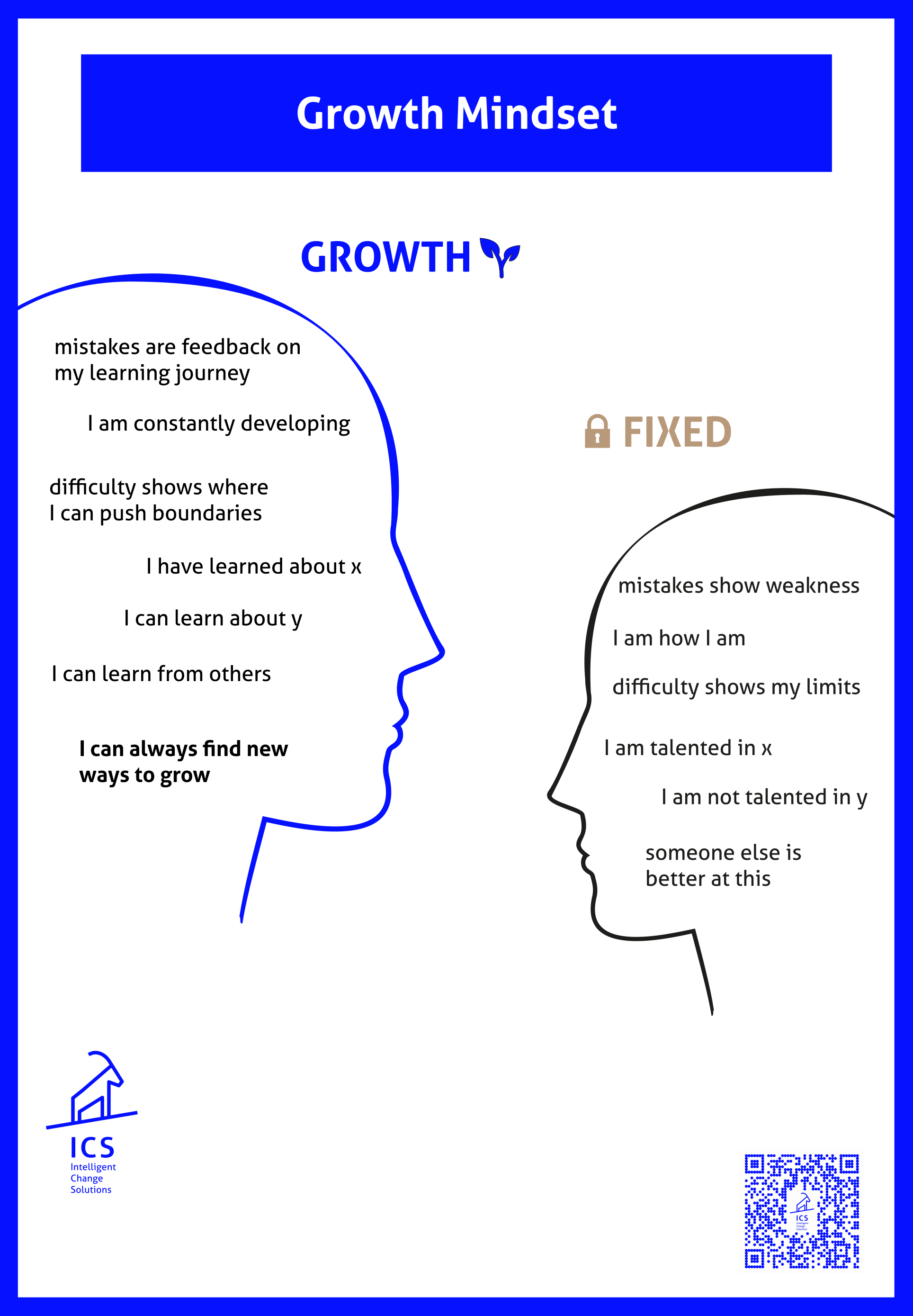
Growth Mindset: A Key to Professional Success
In the ever-evolving landscape of professional development, Carol Dweck’s concept of a growth mindset stands out as a powerful framework for achieving long-term career success.
Understanding the Growth Mindset
At the core of Dweck’s theory is the contrast between fixed and growth mindsets. A growth mindset is the belief that abilities and intelligence can be developed through dedication, hard work, and perseverance. This is in stark contrast to a fixed mindset, which sees these traits as static and unchangeable. Dweck’s research highlights how adopting a growth mindset can boost motivation, resilience, and overall professional success.
Applying the Growth Mindset in Your Career
Adopting a growth mindset isn’t just about individual effort; it’s a strategic approach to lifelong professional development. Here are some practical applications based on Dweck’s research:
Embrace Challenges:
See challenges as opportunities for growth rather than threats to your self-esteem. Step out of your comfort zone and tackle difficult tasks to build your skills.
Be Resilient:
Persistence in the face of adversity is key. Treat failures as learning experiences rather than setbacks, and cultivate a culture of constructive feedback and continuous improvement.
Value Effort:
Understand that effort leads to mastery. Commit to ongoing personal and professional development, recognizing that expertise comes from persistent effort, not just innate talent.
Use Criticism Constructively:
Welcome feedback as a tool for growth. Analyze criticism to extract actionable insights that can help refine your skills and advance your career.
Find Inspiration in Others:
Draw motivation from the successes of your peers. Use their achievements as learning opportunities and foster an environment of mutual support and inspiration.
Make Growth Part of Your Career Strategy
To make a growth mindset a part of your professional journey, set clear, attainable goals that promote skill development. Engage regularly with educational resources, attend workshops, and pursue advanced training programs. Create a continuous feedback loop with mentors and peers to reinforce growth mindset principles. This encourages a culture where progress is celebrated, and setbacks are viewed as learning opportunities.
Final Thought: Commit to Lifelong Learning
Incorporating a growth mindset into your professional development strategy transforms career growth from a static achievement to a dynamic process of continuous learning and self-improvement. By embracing the principles of a growth mindset, you can navigate your career with resilience, adaptability, and a commitment to lifelong learning.