
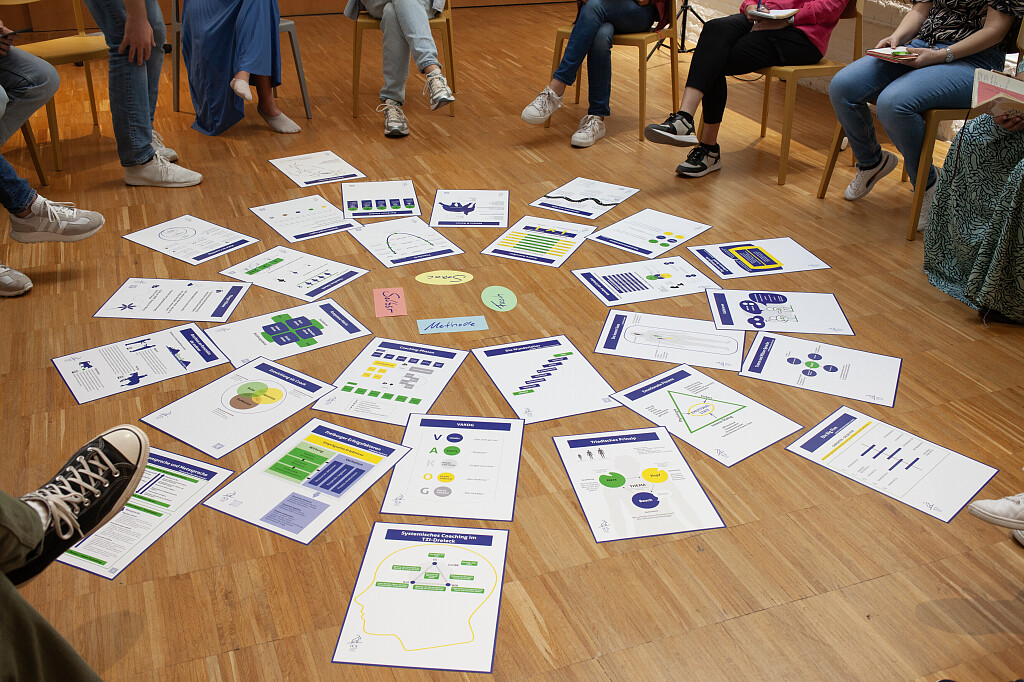
Taking decisions in teams is rarely just about choosing the “best” option. It’s about creating clarity, enabling participation, and ensuring that decisions actually move things forward. Different situations call for different approaches—what works in a strategic discussion may not work in a time-critical moment.
This toolbox brings together a set of structured decision-making processes that can be used in workshops, teams, and organizations. From consensus-based approaches to fast, pragmatic methods, each process offers a different balance between speed, inclusion, and commitment.
Used consciously, these methods help teams avoid endless discussions, reduce hidden resistance, and make decisions that people are willing to support and implement.
1. Consensus
Goal: Everyone actively agrees.
A decision is only made when all participants can fully support it.
Focus: Shared commitment and alignment.
Advantage: Strong buy-in.
Drawback: Can be time-consuming
2. Majority Vote
Goal: The majority decides.
The option with the most votes wins (typically >50%).
Focus: Speed and efficiency.
Advantage: Fast and straightforward.
Drawback: Minority perspectives may be overlooked.
3. Consent (Integrative Decision-Making)
Goal: No critical objections, not full agreement.
Key question: “Are there any reasoned objections?”
Objections are integrated and resolved until they are no longer blocking.
Focus: “Good enough for now, safe enough to try.”
Advantage: Faster than consensus, still high-quality decisions.
Drawback: Requires clarity on what qualifies as a valid objection.
4. Dot Voting (Multi-Voting)
Goal: Surface group priorities by distributing votes across options.
Each participant gets a limited number of votes (e.g., 3–5 dots) and can allocate them freely—either spread across multiple options or concentrated on one.
The options with the most dots indicate the group’s strongest preferences.
Focus: Prioritization and pattern recognition, not necessarily a final decision.
Advantage: Fast and highly visual – reduces winner-looser-dynamic
Drawback: Doesn’t automatically resolve disagreements
5. Resistance-Based Decision (Resistance Check)
Goal: Choose the option with the least resistance.
Participants rate each option (e.g., 0–10 resistance scale).
The option with the lowest total resistance is selected.
Focus: Minimizing friction rather than maximizing agreement.
Advantage: Efficient and pragmatic.
Drawback: May generate less emotional commitment.
6. Consultative Individual Decision
Goal: One person decides after consulting others.
The decision-maker gathers input and perspectives before deciding.
Focus: Accountability combined with inclusion.
Advantage: Fast and informed.
Drawback: Outcome depends heavily on the decision-maker.
7. Unilateral Decision
Goal: One person decides independently, without consultation.
Focus: Maximum speed and autonomy.
Advantage: Very fast.
Drawback: Risk of low buy-in and blind spots.
8. Top-Down Decision
Goal: Decision is made by higher-level leadership.
Focus: Authority and hierarchical control.
Advantage: Clear direction, fast in structured organizations.
Drawback: Limited participation and ownership.
9. Coin Flip Decision
Goal: Random choice between equally viable options.
Used when options are considered equally acceptable.
Focus: Reducing decision fatigue.
Advantage: Extremely fast, avoids overthinking.
Drawback: No analytical justification.


