Why Emotional States Matter
Emotional Fitness is the ability to change your own emotional state. Throughout the course of a day, week, or year, we all experience a wide range of emotions. From being tired to motivated, playful to serious, focused to distracted, our emotional states constantly fluctuate. However, most people tend to cycle through a few recurring emotional states, some of which are helpful and pleasant, while others can be limiting and unpleasant.
The 3 Elements That Shape Your Emotions
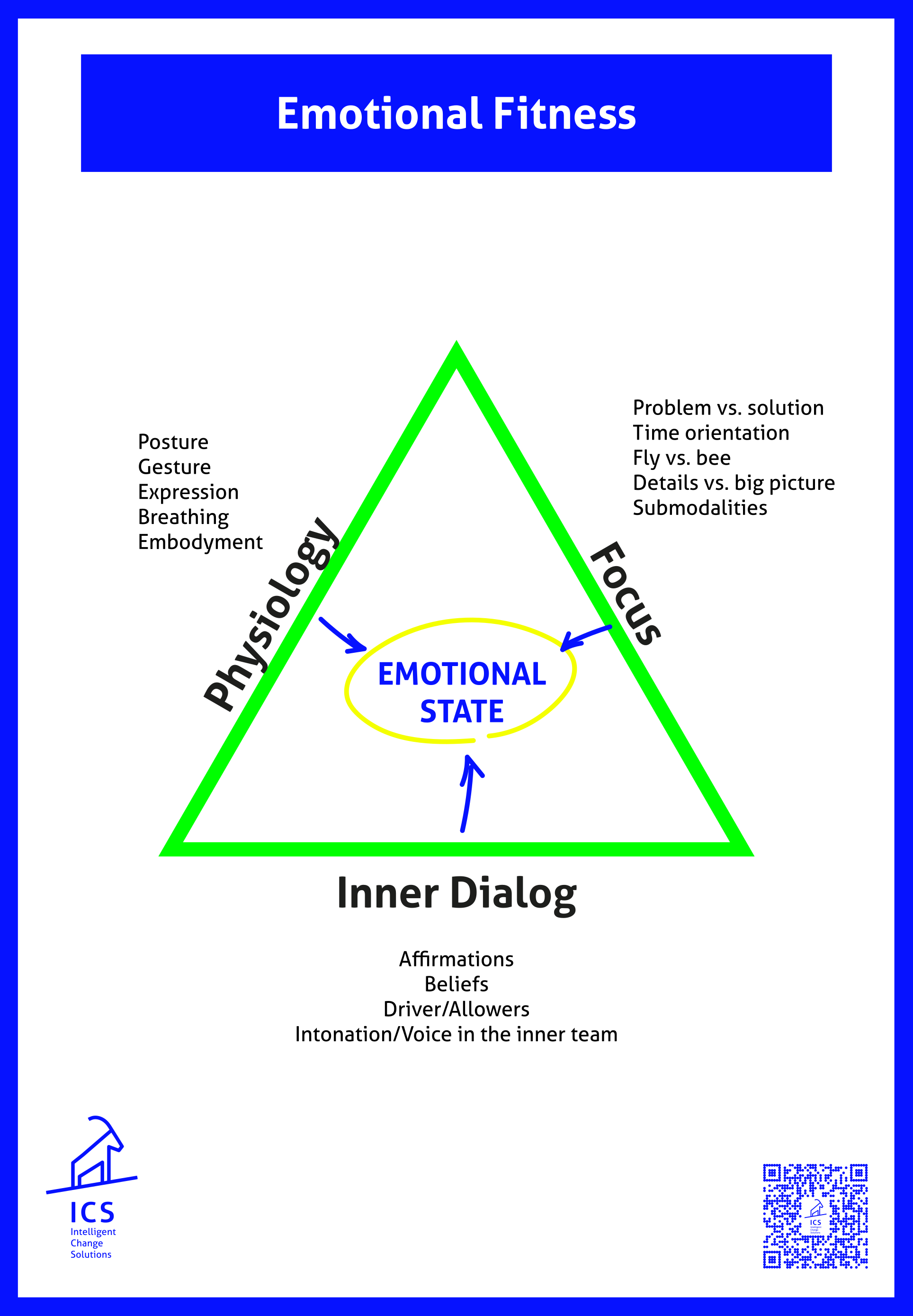
There are three elements that make up an emotional state. By changing one or more of these elements, your emotional state will change as well.
Element 1: Your Physiology
Physiology is the quickest element you can change. Breathe differently, change your posture, stand up, sit down, go for a walk, or even use what Harvard Professor Amy Cuddy calls “Power Poses.” These physical adjustments can rapidly alter how you feel
Element 2: Your Focus
What you focus on will determine your world. You can shift your focus from details to the big picture or vice versa, from problems to solutions, from failures to learnings, and from the process to results. Changing focus requires intentional thought and some discipline to remain focused on what you choose, but it will certainly change the way you see the world and, therefore, how it affects you and your emotional state.
Element 3: Your Inner Dialogue
Even though we sometimes do not consciously hear it, there is usually an inner voice (or voices) that creates our internal dynamics. Habitually, people tend to internalize critical, aggressive, or powerless voices more often than nurturing, soothing, or empowering ones. The tone matters as well. Try changing what you say to yourself and how you say it. You will notice the effect.
Practice Makes States More Accessible
All three elements together make up your emotional state. The more you practice certain states, the better you will get at accessing them on purpose. By consciously working on your physiology, focus, and inner dialogue, you can enhance your emotional fitness and better navigate the complexities of life.
Real-Life Examples of Emotional Fitness in Action
Here are three examples of useful emotional states and the three elements that make them up:
Motivation: Energy and Direction
Physiology: Stand up, adopt an open and confident posture, take deep breaths.
Focus: Concentrate on your goals and the benefits of achieving them.
Inner Dialogue: Encourage yourself with positive affirmations like “I can do this” and “Every step brings me closer to my goal.”
Calmness: Inner Peace on Demand
Physiology: Sit or lie down comfortably, practice slow and steady breathing, relax your muscles.
Focus: Think about peaceful scenes or focus on your breathing.
Inner Dialogue: Use soothing and reassuring words like “I am at peace” and “Everything is okay.”
Confidence: Grounded in Self-Belief
Physiology: Stand tall, shoulders back, maintain eye contact, smile.
Focus: Recall past successes and your strengths.
Inner Dialogue: Affirm your abilities with statements like “I am capable” and “I have the skills to succeed.”