How to Make Trust in Teams Intentional
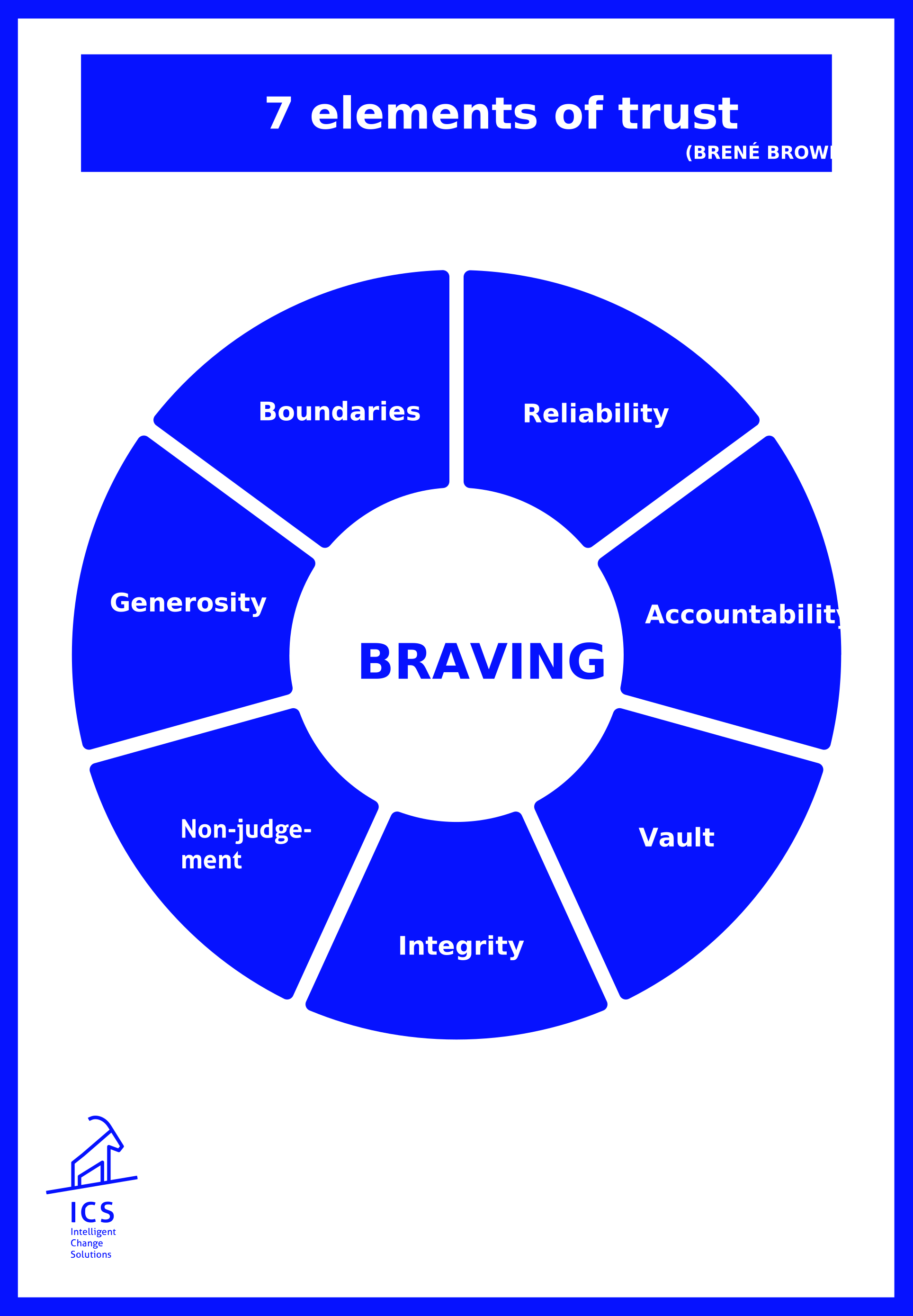
Trust is the foundation of every effective team. Yet it often remains abstract and hard to define. Researcher Brené Brown offers a practical framework to make trust observable and discussable: BRAVING – Boundaries, Reliability, Accountability, Vault, Integrity, Non-judgment, and Generosity.
Making Trust Measurable
These elements help teams intentionally assess and strengthen trust. In team development—especially alongside models like The Five Dysfunctions of a Team—BRAVING provides a shared language to make trust visible in everyday behavior.
The 7 Elements of Trust
Boundaries – Trust starts with clear and respectful boundaries. Knowing what is okay and what is not builds safety.
Reliability – Trust is built through consistent, dependable actions over time—not through one-off efforts.
Accountability – Owning mistakes, apologizing, and making things right strengthens trust.
Vault – What is shared in confidence stays confidential. No sharing of information that is not yours to share.
Integrity – Choosing courage over comfort; doing what is right rather than what is easy.
Non-judgment – Being able to ask for help without fear of judgment.
Generosity – Assuming the most generous interpretation of others’ intentions.
Applying BRAVING in Team Development
Lack of trust is often the core issue in teams. Yet many teams struggle to define what trust actually looks like in practice. Working with the BRAVING model helps teams align and make trust actionable:
Reflection: When did you experience—or miss—trust in the team?
Clustering: Which BRAVING elements show up in these situations?
Action: How can we strengthen these behaviors in our daily work?
Example: Building Trust in a Project Team
A project team struggles to collaborate openly—no one feels safe admitting mistakes. Using the BRAVING framework, the team starts to shift:
Boundaries are clarified
Reliability is reinforced through clear commitments
Accountability is practiced openly
Confidentiality is respected
Integrity is prioritized in communication
Non-judgment enables honest conversations
Generosity shapes how intentions are interpreted
Over time, trust increases: team members feel safer, issues are raised earlier, and collaboration improves.
Reflection Questions for Teams
Where have we experienced—or lacked—trust in our team?
When were boundaries, reliability, or integrity particularly visible?
What concrete behaviors can we strengthen to build trust in everyday work?
Further Resources
Brené Brown: “The Anatomy of Trust” (YouTube-Video)
Patrick Lencioni: “The Five Dysfunctions of a Team” (YouTube-Video)
The 7 Elements Of Trust – Mindbodygreen (Blog-Article)